We have moved into the next century (at last!) and replaced the Striders Newsletter with an online BLOG!
This means that your training stories/advice, race and holiday reports, general anecdotes, including serious and silly photographs, can be published quicker and more regularly.
The published material will then be easily accessible to fellow runners/members, enabling them to comment on and get a "conversation" going.
To make this an interactive informative BLOG, we require good content from our members.
Therefore, please be invited to send any suitable material through to newsletter@stalbansstriders.com
Looking forward to hearing (and reading) from you
The Editor (Petra)

Monday, 28 March 2011

Saturday, 26 March 2011
2010 Autumn Marathons and Beyond.
A group of us did Autumn marathons in 2010 and as Striders always do, shared experiences, thoughts, learning with each other afterwards. This is an attempt to capture some of that on paper, as well as some notable advice from people such as Deb Steer who has 10 years of learning from her success and experiences to pass on. Enjoy the read….
A Decade of the London Marathon
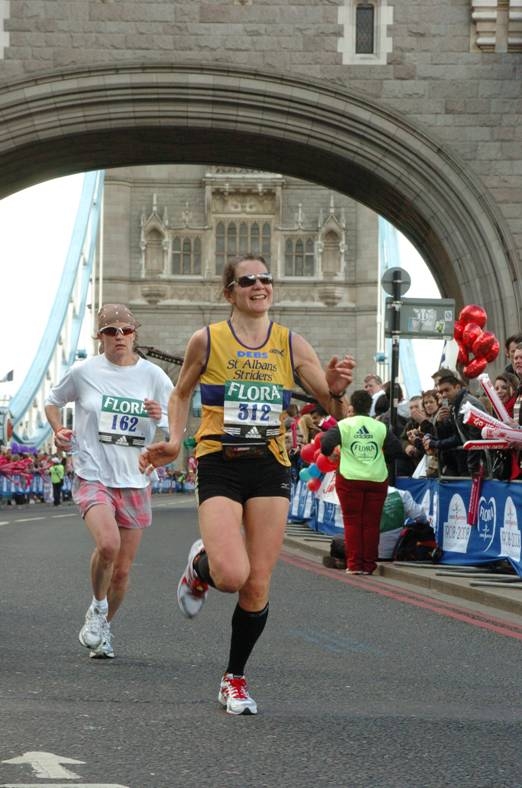
December 2000 my second application for the London Marathon was successful.
What do I do next?
Very apprehensively I took myself along to St Albans Striders. I knew no one. It was like my first day at school although I was quite a bit older and had 3 children of my own.
I had been running 3 miles on the treadmill so the 5 miles with Noel around the ring road was my first step on the ladder to completing the 26.2 miles that April.
This brings me to my first piece of advice—never let it cross your mind that you can’t do it. Marathon running is just a goal, which CAN be reached! There is no time for negative thoughts!!
I soon became a regular Tuesday, Thursday and Saturday morning runner with the Striders. I loved it! Running was never a chore. Meeting so many people from so many walks of life was a bonus.
I remember doing the Hitchin Half Marathon as part of my build-up, but no other Races. I managed do perhaps two 17 mile long runs on my own.
There were a few of us doing our first marathon and I think we were all full of excitement. We had had a share of injuries and I still had a heavily strapped buttock! But NOTHING was going to spoil the day for me!
Just enjoy the whole day! Running round London with everyone cheering you on is a great feeling!
One of the many advantages of being a woman is, it was much easier to get guaranteed entry for the following year.
I didn’t realise it but I had managed to run the qualifying time to compete in the following year’s London Marathon in the “Good for Age” category.
But much more importantly for Carol Mooney and myself was, we had qualified to run with Brendan’s Saturday morning group!
They had always seemed so unreachable and now we had passed the test!
AND - I had a whole year to train for London No 2!
Training: what advice can I give?
It should be fun! If you enjoy running, it will not be hard work. It is a major bonus to have a group of running friends that make your Saturday mornings fun or, in my case. therapeutic.
Without realising you are doing intervals just because you want to beat someone to the top of the hill.
I would also say, don’t be too academic about it. Running marathons is not “text book”. It is a journey. You will have many ups and downs.
It is very hard to prepare for these moments. If you spend all your training hours “in control” of your runs, how will you cope when you “lose control” in unexpected circumstances?
Try and gather as many supporters, friends and family as you can to cheer you on.
It will help you divide the 26.2 miles up into manageable chunks, knowing that “somebody” will be waiting for you “somewhere” on the route!
I spend lots of time running “off road” as it is more forgiving on my ageing body. It also helps with motivation as you feel “faster” “on road” as a result.
Talk to as many people as possible to gather lots of different training ideas. You need to find out what suits YOU best! There are now quite a number of very experienced runners at Striders and qualified Coaches to ask for advice who are only too happy to share and help.
My training has always consisted of two quality sessions a week doing hills, speed work, a long run, my usual Liz-10-miler and a couple of recovery runs.
Although this has been a deliberate decision, in some ways it could also be seen as a mistake, in that it has always had the same format.
When your body gets too used to the exercise you are putting it through, it will just plateau. I need to increase the sessions it if I’m going to make any more improvements to my performance.
This is though! It is much easier to do more of the same than to make it harder!!
Make sure you have a training plan that you follow but, on the other hand, don’t worry if you miss days when you feel ill or have a niggle.
Write a training diary! I haven’t kept one for the last year and my motivation is suffering.
Get a foam roller. Stretching is great but if you have a real knot in a muscle you need more than just stretching.
Sports massage is great if you can afford it. Physiotherapy is sometimes needed with more persistent injury’s but is only as good as the therapists.
I have seen my fair share of therapists who don’t really understand running and its associated problems.
Gait analysis is worthwhile if you feel you may require more help. A qualified sports therapist will advise you of exercises to strengthen muscle groups which are perhaps weaker.
Races. I enjoy racing as it enables me to push myself which ordinarily I find hard. This is a great training benefit.
I particularly enjoy Cross Country as there is no clock to worry about and it can be so hard that the sense of achievement when you cross the finish line is second to none.
I always say to the kids I coach if you can cope with cross country you can cope with anything!
Over the last decade that I have run the London Marathon, the support has continued to increase. It is the crowds cheering that keep me going!
I love to absorb the entire atmosphere, take the fruit and the sweets that supporters offer on the way trying to focus on that rather than the gradual onset of fatigue
In 2004 I was lucky enough to run in my first championship race as in 2003 I had managed to run under 3.15. Again, qualification is easier for women.
It was an incredible race, as not only Jonny Wilkinson kicked us off but also most of my family was on the lead vehicle after winning a competition in the Evening Standard. .
In those days the championship women would start at 9.15 and therefore run most of the race alone.
I would see how near the finish line I could get before the Elite men would come tearing past me.
2008 was another great year as my daughter Megan and one of my young athletes got to run the Mini Marathon.
It was great to know that while I was doing the whole 26.2 miles they were ahead of me running the final 3 miles.
A final piece of advice that I have learnt over the years is to focus on Big Ben on the last stretch!
Then savour the final effort down Birdcage Walk counting down the traffic lights. Try to keep the momentum in your legs going and enjoy overtaking. “Feel” as though you are sprinting and that you have incredible knee lift when really your feet are just clearing the ground.
T
Turn those last two corners and focus on The Finish. Try to treasure that feeling of the ultimate achievement.
The amount of times I wished I could re-live that finishing straight, but “the moment” seems to have been wiped from my memory
I will just have to do it all over again!
Summarising the aforementioned and as borrowed from a book about the London Marathon
‘Running the perfect marathon is like finding the perfect wave to surf’
This year I may run in fancy dress!
Will that be the perfect one?
Amsterdam Marathon 2010
By Shane Ryan
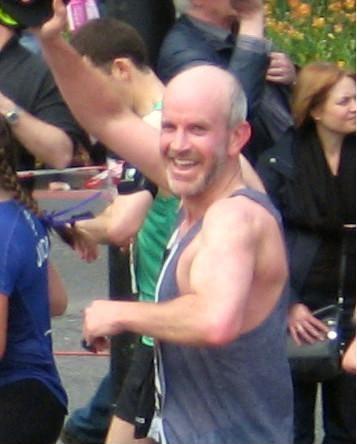
You are running along your local track in the dark about three weeks after the marathon and you are feeling good, the sort of unexpected uplift that you can’t help but notice. It surprises you because you didn’t feel like going for a run today; your body groans as you try to get into a rhythm, and your thoughts retreat.
The whole business of running starts to make sense to you as you feel more expansive and light, and you own the whole muddy track on this wet November evening. It doesn’t feel cold now, the air is refreshing and you can feel it replace the stale office in your lungs.
Your thoughts turn to the marathon and you think it was like an overdose, like something that feels good until you have too much of it. Like something that in small doses gives you a burst and energises, flushes away the frustrations, and puts things into a favourable perspective. You like the feeling it gives you and want more, but you overdo it and you enter the devil’s hell hole which is the last 6 miles. You remember saying something like that at the end of the race, ‘I dipped my toe in the devil’s hell camp’; or some such nonsense. You were in pain at the time, and you noticed all the people strewn on the ground just past the finishing line, particularly the middle aged man sobbing; why do they do it? You recall the event and know that it wasn’t all that bad, the first 20 miles were pleasant enough, although you did have to prepare for the inevitable wall that was heading your way. But when the wall hit you weren’t prepared; how can you be prepared for a tsunami?
The last 6 miles was too much for you to contemplate, maybe break it down to one mile, or better still break it down to each step, one at a time. You remember now how you just thought about putting the next leg forward, one then the other for the last demanding 10 kilometres. Overtaking your brother helped distract you for a few minutes, and the brief burst of energy you got from Gladstone
But none of that really mattered now as you bounced along the old train line on this late autumn afternoon, you did it, you finished, you got under 4 hours, you didn’t stop, and now you are running again. Pain? What pain?
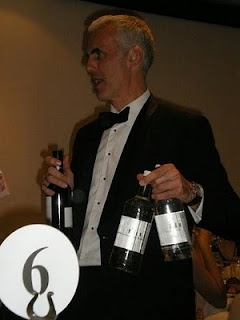
Amsterdam Amsterdam
By Alison Ryan
Marathon First Timer Experience
by Alison Telfer
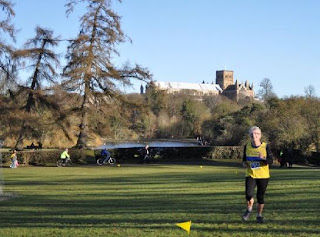
Marathon
2010 Amsterdam
By Martin Halling
Training
The big question - mileage!
I've never done more than 30-40 miles a week during peak marathon training. Is there any substitute to doing more? Generally I've only done three runs a week - one long, one tempo (7-8 miles typically) and one speed (Tuesday night track session usually). And very little cross training.
Can the three times a week schedule really work, if each session is done hard enough? I think I only have time to do one long run (that is any run over, say, 10 miles) a week. If I can convert my one tempo run to four or maybe five tempo runs and do at least 20 miles every long run I can maybe get up to 60 miles a week. Is it as simple as that? Do I have to do some of the extra mileage in longer runs or can I just pick up the miles as and when I am able - possibly just bite sized 5 miles round the park most lunch times?
Speed of long runs?
I know that the three times a week schedule suggests that all runs should be fairly hard. Does the "time on your feet" mantra only apply if you are doing 70 plus miles a week (or in view of the above sums, 60 miles a week!)? I suspect that I've not done many of my long runs hard enough - generally only those when I'm running by myself. Often the long runs take on the air of a social run and there's stopping to re-group, or stopping at the shops for water/jelly babies so it's never quite as punishing as the feeling you get towards the end of a marathon. Do you have to put yourself into the position of feeling like that in training - I guess by running several 26 mile (or thereabouts) runs at not much below race pace? I'd rather not just have to do my long runs by myself and I'm a bit fearful of doing long runs with a group of faster people, but do I have to push myself more?
Speed work.
Should I just be doing mile reps rather than the track sessions? I rather enjoy the track sessions, probably because they have shorter elements (and the sessions may be more helpful as training for shorter races) but should I just do mile reps instead for 3 months before a marathon?
Enjoyment is, of course, rather important to everything because that's why I go running! I have rather enjoyed my marathon training to date, but perhaps that's because I haven't been doing it right! I guess I would give up 3 months of enjoying my running if that was necessary to do my best possible marathon! Because apart from the fun of it there is an element of competition in getting involved with organised running and going racing...
Targets and Planning
This is the root of the problem. I think that I should be able to run a marathon under 3.30 and that target has taken a grip of me. Looking at what other people I can compare myself against achieve (we all do that don't we?) and given that I have already run 3.30 so have only 30 seconds to find from somewhere it may not be an unreasonable target? But is having a rather clear target helping me run faster or is it actually slowing me down because of the psychological pressure or the way it makes me run my races? Could I really do better just putting my kit on and running as I feel on the day without any target? Regardless of the answer to that question, even if I wanted to I can't now forget what I've done to date so realistically I can't see how I could now set off with a big blank in my mind.
First of all, maybe 3.30 is not a realistic target? In my other 3 marathons, during all of which I have walked, I've not done better than about 3.48, so maybe that should be my yardstick? Maybe my 3.30 race was a one off and the best I can ever hope to do! Would I be better off planning my race around a 3.45 target and if things just happened to go well I might do better? But the problem then is that if you plan to pace yourself towards 3.45 and feel good you have to make decisions in the race - see below!
Apart from a target time, I then have to think about splits. I'm sure even pace is the mantra here, but possibly because of the big round number target I have in mind I know that I very much think that getting ahead of even splits and having some minutes "in hand" (for when everything is going to get harder later on) is a good thing. If it really isn't a good thing to try to build up a cushion in the first half of he race how do I slow myself down? In all the marathons I've felt pretty good in the first half of the race so to a large extent I am just running as I feel without lots of target based discipline. In all four marathons I've done the half in between 3.38 and 3.40 which is pretty consistent. Should I be slowing myself down to 3.44/45 or is the amount "in hand" not so much as to put the race out of kilter?
How does one plan for the pain of 20 miles onwards? Do I just continue to hope that maybe this time I won't suffer so badly. Is it possible that I have to do 10 or 20 marathons, in most of which I feel awful after 20 miles, just to get the one lucky day when for some reason it goes OK. In other words do I do nothing to prepare myself for the last 5 or 6 miles because one day it will be OK? Anyway, what can one do about it?
Food?
Before Amsterdam I didn't think this was a big issue for me, but maybe it is. The fact is that, however it's described, I think I just run out of available energy towards the end of the marathon. Nothing new in that and, yes, I've heard of the wall. But the trick must be to take on enough of the right food before and during the race. I'm a veggie but am pretty healthy and fit and I don't change my general diet at all during marathon training. Is there some trick I'm missing? Yes, I have jacket potatoes and/or pasta the night before. I think I eat until I'm full, but should I try to cram in even more? I try to have quite a big breakfast of muesli and fruit with plenty of coffee before the race and I've spent the day and night before drinking squash and water like there's no tomorrow! One energy drink shortly before the race. During the races I have taken gels - possibly three or four starting at maybe 10 miles. I don't have a clear regime and when I'm running even if I have set out with a clear timetable I don't think I stick to it very well. In Amsterdam
I want to plan my race sensibly. Getting it wrong feels like such a waste! I'm never going to do a marathon more than once or twice a year so it's a long time to wait to try again if it's not been properly planned.
The Race
The big question which also arises from my thoughts on targets and planning is, of course, should I try to stick to clear plans or just run as I feel?
The other question which relates to all that is the watch question. I still see my watch as a security blanket. I think I need it in the early part of the race to check my pace to make sure I don't go too fast. As it's the longest race I run the correct pace is obviously the slowest of all races so it's always going to feel relatively easy to start with and the temptation is there to feel too good and to go off too quickly. While I have some idea now about how fast I'm running, I'm not great at that and need help. Those people who advocate "no watch" and not looking at any clocks are still having to set themselves a pace - is it just that they are sufficiently experienced to know how fast they are running anyway so they don't need a watch to help them? I can see that having the very accurate information of a watch might tend to reinforce mental feedback about how the race is going - that's all very well if it's going well and makes you feel even stronger, but when it's going badly I can see that it reinforces the decline in spirit and performance. So, obviously, only wear a watch when you're having a good run!! There may be a serious point hidden there, that to be prepared for a good run you therefore want to have the watch? I think I probably check my watch at each mile (or kilometre in Amsterdam
Even at the start of a marathon I feel like I'm in a race. I don't think I do any stupid weaving around and I try to run conservatively, but I know I'm looking around and judging who I think should be going faster or slower than me and that probably does influence my pace. I can see that the marathon is really even less of a race against other people (rather than against myself) than any other race I run, so should I try to completely ignore what anyone else is doing? How do you do that?
Linked to that is I suppose the issue of running with team mates or for that matter someone else in the race who seems to be doing about the same as me. Or perhaps even the pacing person with the 3.30 balloon if you are in a big marathon - albeit that I could see that the 3.30 group at Amsterdam, who went past me just about when I stopped to walk, were being paced to hit 3.30 exactly. Why don't they do a 3.29 balloon!! Running with others can certainly make it more enjoyable and relieve some of the tedium of covering the distance. Running with others also removes some of the mental pressure of deciding what to do, but the flip side of that is that you may not be running exactly how you feel. If you get to a point where you can't keep up there is the reinforced negative mental feedback of "going backwards". I suppose if you ran with a slower group for a lot of the race and then got the positive feedback of "going forwards" that might be helpful. The thing is, as I said before, I have a pretty good idea of the other people around me in the race, so I know when I'm starting to going backwards (or forwards) anyway even if I've not been running close to the same person or sharing the odd word along the way. I don't know how you can really avoid getting that feedback, but I suppose it's a bit like the watch question - if it's going well then you're happy to have the feedback!
I've already mentioned trying to prepare for feeling bad towards the end of the race. I'm not sure if there is any trick, but you need to be mentally prepared for it to be bad. I don't think I'm a particularly weak and undetermined person, but that seems to be what the marathon does to me. I have walked towards the end of 3 marathons, although the circumstances were all a little different, as follows.
In my first marathon I had a more disastrous than usual start (ran 3 miles to get to the start line but still missed the start of the race and ran far too fast to catch up etc). When I stopped at 20 miles I think it was (or is the closest I have got to) a proper "wall". I made no conscious decision to stop and the first I knew about it I was just standing at the side of the road feeling completely empty. An out of body experience! Because of what had happened earlier on I can just put that down to misfortune and bad planning maybe.
In the next marathon in which I walked I also stopped at 20 miles. My excuse this time would be that it was only two weeks after I'd run my good marathon so I was bound to be weak and was stupid to be running another marathon. But this time I had felt myself slowing down and when I saw the 20 mile sign I made a conscious decision that I would stop as I wasn't feeling great. I was rationalising that I was only up to running a 20 mile race that day or perhaps I was just wishing that I was running a 20 mile race. Either way, this was a conscious "giving up". As I say, I don't want to be a person who "gives up" but it does seem all too easy when running a marathon.
Learning from Amsterdam Marathon 2010
If I do another marathon…
In the preparation and training:
Previously, I had trained for 4 marathons and been injured each time, because I was trying to use the Runners World type training schedules, with 4 or 5 runs a week – my body at my age just doesn’t cope with that intensity of training. Amsterdam
Doing a 20 mile training run that is off-road (The Dunstable 20) is more physically demanding than a regular training run. Despite its beauty, I am not sure that I would do this one again. I found it too demanding, and didn’t run for 9 days after it.
Use the Garmin enough times during training so that I begin to know what my pace is.
Do sufficient runs at marathon pace, using the Garmin, so I can tell if I am on track with my marathon pace, and have a pretty good idea of whether I am running 15 secs per mile faster or slower than my predicted pace. I only did two runs at marathon pace with a Garmin, and didn’t use my Garmin at all in training, so I had a very hazy idea of what my expected pace would feel like.
Expect to feel completely knackered after every long training run. Try not to book too much else in during those six or so weekends of heavy training. Don’t have overseas visitors staying with us (as we did), or have undertaken a project at this time to re-do the front garden and refurbish the bathroom at the same time (as I did). Give yourself permission to have an afternoon nap if needed.
Consider changing my running shoes to try another brand – despite quite new running shoes, my feet were so sore at just over half way that I had to take painkillers. The soreness was from striking the ground, not from blisters, although I did get those too. (secondary learning – I really do need Ibuprofen).
During the Race
Don’t leave myself so little time to queue up for the baggage deposit that as per Amsterdam, I had to give up on the queue, throw my bag of clothes on the ground, run to the start, climb the barrier to get into the pen as the race is about to start, trap my leg in the railings and get stuck on top of the barrier for several seconds until helped down by someone, beginning the race with a bruised and grazed leg.
Personally, I don’t benefit from gels or jelly babies. Sports drink does the trick. Eating jelly babies on long training runs made me feel nauseous, as did gels.
It is better to run my race without paying too much attention to a watch or timing. As Coach Jubb advised would happen, I did panic when every time I looked at my watch, I was either going too fast or too slow. My pace see-sawed during the first few miles as I either slowed down too much, or speeded up too much every time I looked at my watch.
However, I do need to be sufficiently familiar with knowing what my marathon pace feels like. With Amsterdam
Another bit of learning - Music is good for certain portions of the race for me, but choose my songs a bit more carefully. When I really needed some upbeat tempo stuff, and the MP3 got stuck on Ludovico Einaudi (modern pianist), it was not a good mile. However as the race progresses to the last 6 miles, music (and everything else) becomes intolerable.
Around mile 20, I saw the back of someone’s charity t-shirt in the race with a saying across the bottom of the shirt ‘Determination is everything’. I repeated this to myself pretty much continuously for the entire last six miles and that helped me to finish. As well as the occasional ‘You never have to do this again’ thought.
Which brings me to:
Why ever run another marathon?
I really disliked the effect of the long training runs on my life. For that six weeks or so, it felt as though I did not have energy for much else in my life, that is, apart from work and the absolute essentials of running a house and having teenage children. I began to dislike running. When driving my car, I would look at any runner sympathetically rather than enviously. I was vocal (to a boring degree), in my determination to never run another marathon after Amsterdam
The last six miles of the race were one of the most acutely unpleasant 60 minute periods of my life. I was in such pain – my calves felt as though they were about to explode, and with even 1 kilometre to go, I was not sure I would be able to finish, as people all around me were coming to a sudden stop, gripping their hamstrings or calves in agony. The bones in my feet felt so utterly battered and sore that each step was extremely painful, despite the painkillers.
For 3 days afterwards, I could not tackle stairs and shuffled around at work and home.
It took a month to recover from the run. My feet and calves were twinging with every run at three weeks post race, and my energy was just not back to normal levels when running.
I did not feel particularly elated with my time, despite running at the time I had hoped for, and taking 9 minutes off my only other previous proper marathon. Because most of the last half and particularly the last six miles was just so unpleasant, there was a sense of ‘So what?’ about it all.
Two Possible Reasons to do another one – beat my PB or do London
I could go through it all again and perhaps if I train better and pace myself better, take 5 mins or maybe even as much as 10 mins off this time. But for what? I am not convinced that it would be worth all the pain and negative impact on the quality of my life. (Beating my Half Marathon PB is another matter though, and one that fills me with enthusiasm. I love a half marathon distance.)
I have not done London London London Amsterdam
Marathon First Timer Experience
by Alison Telfer
I’ve only done the one marathon (though plan to do a couple in 2011) and I ran very slowly finishing in just under five hours.
My tip to other people who are on their feet for a long time is not to stop refuelling even if you feel like you can’t face another thing. I was feeling great at the 20 mile mark and thought that I couldn’t face the banana and drink that my parents were kindly offering me (on my previous instruction).
I also at this point removed my bum bag which held some emergency rations as it was annoying me (even though it was small and not cumbersome at all). About a mile later I suddenly felt hungry and weak (may have been psychological but nonetheless felt real) and I could have eaten the penguin who went flying by (not a hallucination but one of the few fancy dress runners). Luckily there was Kendal Mint Cake on the horizon but i had a dodgy couple of miles where I couldn’t even respond to my nephew shouting insults from the roadside.
I have learnt from this and will carry a small roast dinner when running my next marathon (or at least some extra jelly babies and such foods).
Marathon
by Gladstone Thompson
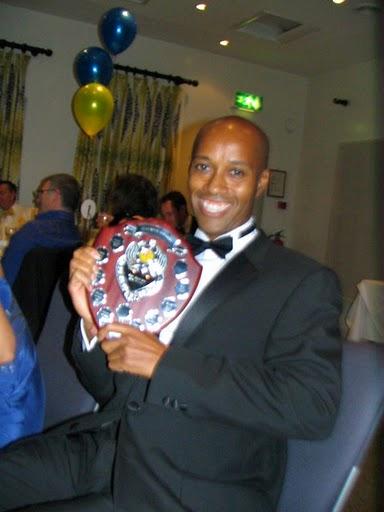
I’d encourage anyone training for spring and autumn marathons to take advantage of the Saturday morning runs going out from Westminster lodge.
My marathons were much improved last year because of these runs. Yes, the 8am start is early for some including myself but at least you’ll get your long run out of the way so that you can enjoy the rest of the weekend. Also it’s a great way to focus the mind just as you have to do on race mornings. I know that I’ve got to be up early enough to eat breakfast, get dressed, sort out nutrition/drinks plus do all the other pre-run stuff that we all do, then be out of the door by 7:35 at the latest in order to get to Westminster lodge on time, any later then I’ll be getting into the park late and will most probably be saying goodbye to the various groups setting off for the morning.
Also, trying to work out routes and distances especially while out running can be very time consuming. I can pre-programme my Garmin with set routes but this takes away some of the enjoyment of running as I’d be too focused on looking down on my wrist rather than looking at where I’m actually running. I found it so much easier to join up with the organised runs and really appreciated the efforts of the run leaders who took us on such great routes aroundSt Albans plus they knew the distances without having to refer to electronic devices.
Finally, going out on Saturday mornings is a great opportunity to meet up with others to talk about the high and lows of your marathon training and to assess your progress.
My marathons were much improved last year because of these runs. Yes, the 8am start is early for some including myself but at least you’ll get your long run out of the way so that you can enjoy the rest of the weekend. Also it’s a great way to focus the mind just as you have to do on race mornings. I know that I’ve got to be up early enough to eat breakfast, get dressed, sort out nutrition/drinks plus do all the other pre-run stuff that we all do, then be out of the door by 7:35 at the latest in order to get to Westminster lodge on time, any later then I’ll be getting into the park late and will most probably be saying goodbye to the various groups setting off for the morning.
Also, trying to work out routes and distances especially while out running can be very time consuming. I can pre-programme my Garmin with set routes but this takes away some of the enjoyment of running as I’d be too focused on looking down on my wrist rather than looking at where I’m actually running. I found it so much easier to join up with the organised runs and really appreciated the efforts of the run leaders who took us on such great routes around
Finally, going out on Saturday mornings is a great opportunity to meet up with others to talk about the high and lows of your marathon training and to assess your progress.
The Dos and Don’ts for Marathons.
By Colin Braybrook
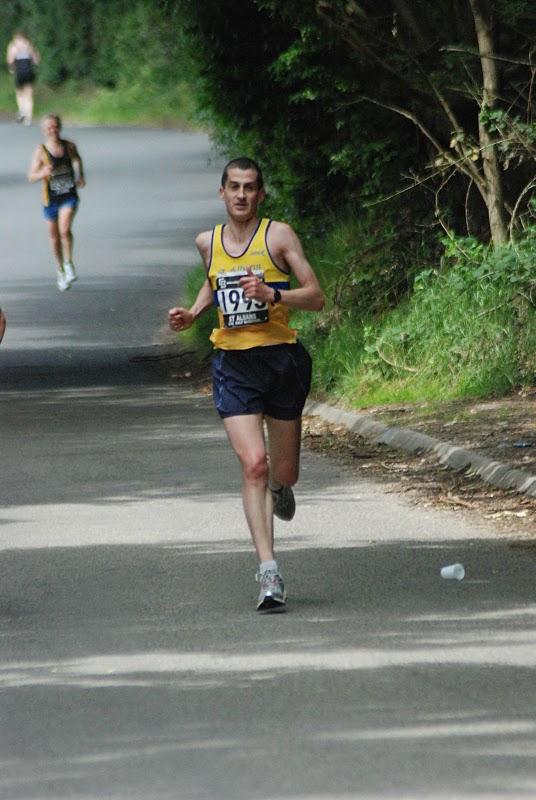
DO want to do the race – if you cannot get that mental picture of finishing the race in your head beforehand, things will be so much harder when the going gets tough.
DON’T worry if you don’t feel 100% on the morning of the race. You have a long time to perk up and you probably won’t feel 100% at the finish either!
DO train often. If in doubt, train. If totally miserable about it, don’t train.
DO long runs as much as you can bear to. They help build mental strength as well as physical strength.
DO other races apart from the marathon. Your marathon should not be your only race. Getting used to races is just as important as getting used to distance. Why waste all that training on just one race?
DON’T taper too much.
DO drink water, but DON’T overdo it.
DON’T expect the marathon to be easy. It won’t be.
DON’T always expect to enjoy the marathon. Sometimes the more you hate it the faster you will want to get it over with.
DO be ready for the point when treats (water, gels etcetera) do not help any more. At this point, focus on the finish and your mental strength and determination are what will get you through.
DO ignore aches and pains at this point and just focus on finishing. The sooner you finish, the sooner the pain stops!
DO break the last few miles into small chunks in your head. Think of them as a Tuesday night track session (with no recovery between each repetition!).
And lastly....some "Odd Bods" Advice....
Nikki
And lastly....some "Odd Bods" Advice....
Nikki
One thing I've learned from my multiple marathon training is its not necessarily the ammount of mileage put in but the quality of those miles. Basically don’t be a fool like me and do 70 + miles a week! When I did 40(ish) and cross trained with speedwork etc etc I got a better time! In this case more is not always better!! And should my injury clear up and let me train for London
Jack Brooks
My advice is to take each one as it comes and not worry about them too much. Everybody has good days and bad days and there are bound to be times during each marathon where you feel particularly good or particularly bored. The main thing to remember is that there is always another race you can enter and not to pin everything on a single event. Whether you have a good, average or bad marathon there is something to be learnt from each one.
Hallam
(who else would give this advice?)
Remember to stop after 26.2 miles
New York Marathon 2010: Not just a jog in Central Park!
By Linda Powell
On Sunday 7th November, just 2 weeks after sustaining an injury to my lower left leg that threatened to jeopardise my chances of taking part, I successfully completed the New York Marathon.
After months of training, I couldn’t bear the thought of not being able to take part but a short test run prior to flying out reassured me to try. So, I decided to run “no matter what” and if there was pain, it would only be for around 4 hours of my life!
Having collected my race pack and number the previous Friday, I rose at 5 am on race day and caught the 7 am ferry across to Staten Island where a lovely American girl called Ana shared her blanket with me; it was freezing, around 48-50C. I was in “Green Wave Two” which was due to start at 10:10 am. However with over 45,000 runners taking part you never get off on time unless you’re at the very front.
I decided to go out with the 4-hour-pace-group. This meant following Bruce, a guy with green balloons and a badge pinned to his back. There were around 10 of us in his group, all excited and grinning nervously as the official air horn signalled the start. The sun was shining as we ran across the bridge onto the mainland with the New York skyline looking amazing, peering through the left hand side of the bridge. I thought to myself, that I was really privileged in my life to be able to take part in this race. At mile 2 we entered Brooklyn and the crowds were roaring. It was just so amazing!!!

Still in Brooklyn and at mile 8 l looked out for my brother (who lives there). As I ran down the road I saw him and his wife who gave me a big “High 5”. It’s great to see people you know along the way.
I was wearing my St Albans Striders vest with my name on it, so the crowds were calling “come on Linda” all the way. My leg had a dull ache but was holding out quite well. It was so good to be running again and the sun was out with the most beautiful blue sky. We headed towards the Pulaski Bridge passing the halfway mark—only another 13.2 miles to go! The other side of the bridge took us into Queen’s; the next mile or so is flat and then you hit the dreaded Queensborough Bridge, which is a never ending gradual incline and I felt I was starting to struggle to keep up with the group. We finally stepped off the bridge at the 16 mile mark.
As we turned the corner into First Avenue, Manhattan, we heard and saw the largest, loudest crowd on the course - it was just fabulous! I carried on with the 4-hour-pace-group. Every now and then Bruce shouted to the crowd “Let’s hear it for 4 hours” and the crowds went mad.
At 19 miles I couldn’t keep up anymore and was flagging. I just ran out of steam and felt delirious. I stopped for a large drink of water and another energy gel but I was sick of them. I started to run/walk for a while, taking pieces of bananas and an energy drink that were being handed out.
At 20 miles I entered the Bronx to loud disco music, which gave me the urge to run again.
At 21 miles I was back in Manhattan and really struggling. I kept running/walking.
At 22 miles there was a massive hill just before entering Central Park. I just had to walk.. The crowds were so encouraging saying “give me 5” and saying “you can do it Linda”. By this time I was losing the will to live!
I got to mile 25 and told myself “just run, it doesn’t matter what the time is, just finish and then you can rest forever more (no pain, no gain!)” I started to run and didn’t stop, I even got a sprint on in the last 800 metres and finally came through the finishing line in 04:18:09 - two minutes faster than my London time this year.
The next day I could hardly walk but I was so proud of myself. Finishing in under 4 hrs 30 mins meant my name and finish time were printed in the New York Times the following day.

A Tale of TWO Marathons
By Gladstone “No-my-name-is-not-Jack-Brooks” Thompson
Apart from running in the London Marathon, I have always wanted to head to the Big Apple and take part in the New York Marathon.
So, after 3 years of being rejected through the ballot system, I was finally guaranteed a place for November 2010.
HOWEVER, after a Striders night out at the Peahen some 15 months previously, I somehow found myself committed to the Amsterdam Marathon just 3 weeks prior to New York as well.
The Jack Brooks of this world wouldn’t find this to be a problem but for me, I just wasn’t sure if my running CV would be up for such a challenge.
As it was, I decided to ‘bite the bullet’ and go for both races.
Amsterdam was going to be my autumn ‘A’ race and New York my ‘just get around and enjoy the atmosphere then head to the shops’ race.
So, first up was the Amsterdam Marathon.
In the year leading up to this race interest within the club had increased such that 9 striders had signed up, along with a support crew consisting of Mike’s Jubb and Jack, plus Antonia Jubb.
I had previously run Amsterdam in 2008, so I was really looking forward to taking part again and sharing the experience with my club colleagues.
On the morning of the Marathon, 10,000+ runners assembled on the track in the 1928 Olympic Stadium for the start of the race.
The weather conditions were spot on, about 10°C, a slight breeze, and very sunny so dark glasses were the order of the day. The course was very flat, as you would expect for Amsterdam, so there was definitely potential for a PB.
With this in mind I set off at my Marathon pace with the aim of picking it up in the later miles.


The race had three distinct sections, the first took us on a 4 mile loop lined with enthusiastic crowds, which made for a fantastic atmosphere.
The crowds then thinned out down to just a few spectators watching from their gardens as we headed into the ‘like it or hate it’ second section of the race, which took us down and back up the banks of the River Amstel.
We were treated to a live band playing music from a riverboat but otherwise this was a very quiet part of the race.
At 16 miles we were back off the river and into the enthusiastic crowds again who cheered us on for the third section and “business” end of the race.
At this stage I started to feel a few of my pre-race niggles and a few doubts started to creep in.
But then I was fortunate to see the Striders Support Crew who helped spur me on.
In the latter stages I managed to catch up with Carol Mooney who was running well, and then Shane Ryan who looked like a man gunning for a PB.


Ordinarily I would have been happy to hang around for a chat, but by now I was “a man on a mission”. With the finish just a few miles away I decided to push on and chat later!!
We finally finished back in the stadium were we started but now the stands were jam-packed with spectators cheering us all the way to the finish line.
Post-race I managed to meet up with most of the Striders just outside the stadium.
We all sat around for a while to recount some of our race experiences and to allow enough time for our legs to stiffen before eventually setting off like zombies back to our hotels.
Katie and myself were very pleased with our day’s efforts.
I ran 3:49 a PB, and Katie 4:11 her best Marathon time for 2010.

There were several other great performances from the Striders including PB’s for John Ockenden and Gill Jubb who knocked out 3:04 and 3:21 respectively, and Shane Ryan who achieved his aim of doing a sub-4 by coming in at 3:58.


Later that evening a few of us met up for post-race drinks.
We all had tales to tell of ‘if only I did this and that’, but I think it would be fair to say that we all learnt something about our running abilities that day. Experiences that would hopefully serve us well in future Marathons.
However for two of us, our minds now turned to how we were going to fare in New York in three weeks time.
For our next outing in New York we were joined by Linda Powell who was running her second Marathon.
Katie and myself picked up our race numbers at the Expo the day before only to find out that the organisers had for some reason changed our pre-race 7 am bus tickets for 6 am ferry tickets.
The bus was going to take us from just outside our hotel directly to the start. However, our new tickets meant making our own way to the ferry terminal, getting across to Staten Island and then getting another bus to the start.
On race morning we hopped into a taxi to get us on our way but it turned out that our driver didn’t know the way to the ferry terminal! Apparently, it was his first day on the job.
Exactly what we didn’t need!!
How I envied the Elite runners and Celebrities at this point, all of whom would have been chauffeur driven to the start line.
As it was, I told the driver to head south and “stop when you see water”!
Miraculously, following my instructions, he eventually got us to the ferry, but NOT before driving the wrong way down a one-way street!
We then made it across to Staten Island for the start.
In near freezing conditions, the 44,000 runners taking part set off in 3 waves, first heading along the Verrazano-Narrows Bridge into Brooklyn, then on through the other boroughs of New York, before eventually finishing in Central Park.
As with the London Marathon there were super-enthusiastic crowds along the whole course. The noise coming from them was relentless.
If you ever wanted to do a Marathon just for the atmosphere and crowd support then New York is for you.
I would say that it rates just as high if not higher than London.
Whereas, if you just wanted to race in “peace and quiet”, and increase your Marathon tally, then sign up for Luton!!
In amongst the cheering crowds I noted loads of banners referring to Chuck Norris, with most of them saying that he had never run a Marathon.
For those who don’t know, Chuck Norris was an 1970’s and 80’s all-round tough guy, stuntman, American karate champion umpteen times over. On one occasion he even gave Bruce Lee a run for his money.
However, as tough as he was, he had never run the New York Marathon…maybe he should have joined a running club to toughen up!!
One of the more notable points on the course, and some would say a highlight, was at about 16 miles where the crowds started shouting ‘one more drink before the bridge’.
They were referring to the notorious mile long double–decked Queensboro bridge, which crosses the East river from the Borough of Queens and takes you for the first time into Manhattan.
Running along the lower deck this bridge just seemed to go up and on forever, while sapping the energy out of most who crossed it.
However this didn’t deter loads of runners stopping to take photographs as proof that they had conquered the bridge.
For me, this wasn’t the time for “holiday snaps” as there was still a “job to be done”!
Coming off the bridge and turning into First Avenue we were faced with a long stretch up to the Bronx before turning around and heading back down towards Manhattan and the finish in Central Park.
I used to think Central Park was flat. How wrong I was! This park had hills, not Watford/Berkhamsted Half Marathon type hills, but at this point in the race they might as well have been.
By now the crowds were 10-deep and their support was just what I needed as I started flagging big time.
My mind was saying the usual negative things. It just does at this point in a Marathon, plus my Garmin seemed to be doing crazy things as well. That finish line couldn’t come quick enough!
I then saw the marker for “800 metres to go”.
‘Great, twice around the track’ I thought, however as with all Marathon finishes, that “twice around the track” is a very long way, but I eventually got there and crossed the line saying:
‘Never again…..ok, maybe until next time!!’
I finished in 4:03 and Katie did 4:22. No PB’s this time.
Maybe our times would have been better if we hadn’t run Amsterdam, BUT we didn’t care as this was our race to ENJOY.
Linda Powell who had been nursing a leg injury in the weeks leading up to NY, came good on the day and ran a PB of 4:18.


Following our Marathon efforts we had several more days in New York doing some much deserved retail therapy before heading back home to reflect on our achievements for the year.
In summary, Amsterdam was race I enjoyed just as much second time around and would certainly do again. Maybe another Striders trip will be on the cards?
New York, is just the biggest Marathon in the world! While a challenging course it’s well worth doing just for the experience.
Overall, I achieved my running aims for 2010 and now looking forward to ‘kicking some butt’ in 2011…..
Now, where’s Chuck Norris???

Subscribe to:
Posts (Atom)